?Are you ready to confront the realities of modern conflict where code, networks, and human decisions decide outcomes as much as tanks and missiles?
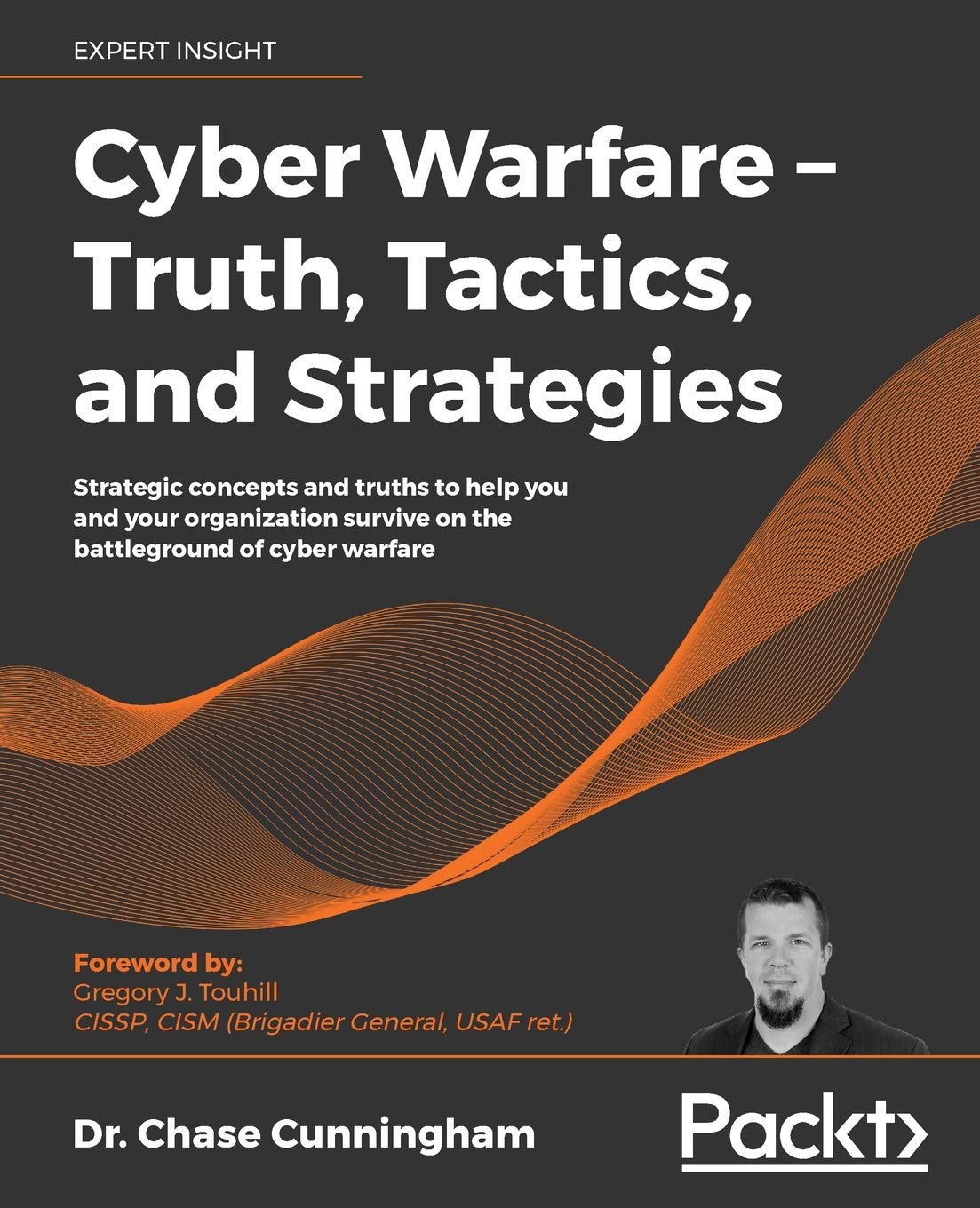

Overview of “Cyber Warfare – Truth, Tactics, and Strategies: Strategic concepts and truths to help you and your organization survive on the battleground of cyber warfare”
This book presents itself as a practical, no-nonsense manual for understanding cyber conflict from both strategic and operational angles. You’ll find a blend of high-level principles and tactical guidance aimed at helping individuals and organizations survive in an environment where attackers are persistent, adaptable, and increasingly sophisticated.
The author frames cyber warfare as an extension of traditional conflict with its own rules, and your reading will focus on both the technological and human elements that create risk and opportunity. The book’s promise is practical survival: to give you tools to make better decisions, prioritize defenses, and prepare your organization for adversarial actions that range from espionage to critical infrastructure disruption.
Who should read this
You’ll get value whether you’re an executive, a security leader, a practitioner, or a policy maker. The material is pitched to people who must make decisions about cyber risk or implement programs that translate strategy into operations.
If you’re building a security program, responsible for protecting assets, or advising leadership on cyber posture, the book offers frameworks and language to make your case and the strategic context to prioritize investments. Even if you’re not technical, the emphasis on decision-making and organizational behavior makes the material accessible and applicable.
Key themes and concepts
The book repeatedly returns to a few core truths and strategic concepts that shape its recommendations. These concepts are practical and intended to shift how you think about security beyond compliance checklists.
A major theme is that cyber warfare is continuous and asymmetric — attackers can choose time, place, and method while defenders must protect broadly. Another theme is the interplay between technical controls and organizational processes; the book stresses that technology alone rarely solves strategic risk without policy, training, and leadership alignment.
Strategic truths
The author lays out several foundational truths that are meant to reorient your expectations. You’ll be encouraged to accept that perfect security is impossible and that survival depends on resilience, detection, and response as much as prevention.
These truths include the inevitability of compromise, the value of intelligence-driven defense, and the need to proportion defenses to the attacker’s motivations and capabilities. You’ll be guided to think in terms of acceptable risk and mission continuity rather than absolute protection.
Tactics and techniques
Beyond high-level statements, the book provides concrete tactical approaches you can apply. You’ll find descriptions of common attacker techniques, recommended defensive countermeasures, and practical checklists for incidents.
Tactics covered range from adversary reconnaissance and supply chain manipulation to social engineering and ransomware campaigns, paired with counter-tactics such as network segmentation, monitoring, and deception. The intent is to give you actionable items you can implement within existing operations.
Organizational strategies
The book emphasizes that strategy must be organizationally embedded to be effective. You’ll learn how to shape governance, align incentives, and design response playbooks so that the organization can act coherently during crises.
There’s also focus on cross-functional coordination — how legal, HR, communications, and executive leadership must coordinate with security teams. The author stresses that policies without practiced procedures and leadership backing are unlikely to withstand real stress.
Technical vs non-technical focus
The author balances technical content with human and organizational discussion. You’ll find enough technical explanation to understand attacker mechanics and defensive tradeoffs, but not so much that it’s only for engineers.
The non-technical focus is deliberate: many battles are won or lost at the decision-making level, and you’re encouraged to prioritize investments that improve detection, decision speed, and recovery capability as much as perimeter hardening.
Structure and writing style
The book is organized so that you can read it end-to-end for context or skip to tactical sections for immediate guidance. The style aims to be conversational while remaining authoritative.
Chapters are typically short, each centered on a strategic truth or practical domain, allowing you to absorb discrete ideas and takeaways without getting bogged down in dense theory. The language favors clarity and examples over jargon, which helps you translate concepts into organizational action.
Chapter organization
Chapters generally begin with a statement of the concept, followed by case examples, recommended tactics, and a summary of key actions. You’ll appreciate the predictable format when you’re looking for quick guidance.
This arrangement makes the book useful as a reference; you can search for a topic like supply chain risk or incident communications and find a concise treatment with recommended next steps that you can apply.
Tone and accessibility
The tone is friendly and pragmatic, aimed at getting you to act rather than just theorize. The author assumes you want to protect assets and reduce harm, so the writing prioritizes what you can implement quickly.
Accessibility is strong: explanations are framed so that non-technical leaders can engage with the material, while practitioners will still find useful tactical advice and frameworks to justify investments and shape programs.
Use of case studies and examples
You’ll find a steady stream of case studies and hypothetical scenarios that illustrate how the concepts play out in real situations. These are used to show mistakes, highlight successful tactics, and emphasize tradeoffs.
Case studies help bridge theory and practice, showing how strategic truths translate into operational decisions and the consequences when organizations fail to act on foundational principles.
Practical value and applicability
The book’s strength is its practical orientation — you can walk away with actionable programs and priorities. The guidance is built to integrate with real-world constraints like budget, politics, and legacy systems.
You’ll get checklists, playbooks, and decision-making frameworks that help you move from strategy to implementation. The recommendations are sensitive to the fact that many organizations must protect while staying operational, so resilience and risk-based prioritization are emphasized.
For executives and decision-makers
As an executive, you’ll receive language and frameworks to make informed risk decisions and to demand meaningful metrics and accountability from your security teams. The book helps you focus on mission continuity rather than technical minutiae.
You’ll also find advice on how to frame cyber risk to boards, build cross-functional crisis teams, and fund initiatives that yield measurable improvements in detection and recovery.
For security practitioners
If you’re a practitioner, the book offers tactical blueprints and justification frameworks to improve visibility, reduce attack surface, and strengthen incident handling. You’ll appreciate pragmatic checklists and suggested configurations for prioritizing defensive efforts.
The text helps practitioners make the case for investments like logging, monitoring, segmentation, and tabletop exercises by tying them back to strategic goals and measurable outcomes.
For policy makers and legal teams
Policy and legal readers get insights into how cyber warfare intersects with national strategies, law enforcement, and regulatory expectations. The book helps you understand the operational constraints and timelines that security teams face.
You’ll be better equipped to craft policies and contracts that account for realistic security postures, incident response obligations, and the need for information sharing without compromising sources or capabilities.
Table: Quick breakdown of key content, expected impact, and recommended next steps
| Topic | What you’ll learn | Immediate impact | Recommended next step |
|---|---|---|---|
| Strategic truths | Acceptance of compromise and resilience-first mindset | Faster alignment on realistic goals | Host an executive workshop to set risk appetite |
| Threat actor profiling | Motivations and capabilities of different adversaries | Better prioritization of defenses | Map critical assets to likely threat actors |
| Detection and monitoring | What to log and how to monitor effectively | Improved time-to-detection | Implement centralized logging and alerting |
| Incident response | Playbooks and decision points for crises | Better coordinated responses | Run tabletop exercises quarterly |
| Supply chain risk | Ways third-party compromise occurs | Reduced attack surface via contract controls | Audit top 10 suppliers for security posture |
| Ransomware readiness | Prevention, negotiation, and recovery lessons | Lower probability of paying and faster recovery | Establish offline backups and rehearse restores |
| Organizational design | Roles, responsibilities, and executive buy-in | Clearer accountability in incidents | Define RACI for cyber incidents |
| Legal and communications | Handling notification and public response | Reduced reputational and legal damage | Create pre-approved communication templates |
This table gives you a quick way to match topics with practical steps you can take immediately, allowing you to prioritize based on your organization’s maturity and threats.
Strengths
The book’s clearest strength is its practical orientation paired with strategic framing. You’ll leave with concrete actions and the reasoning to justify them to leadership.
Another strength is the balance between technical and non-technical content, making it useful across roles. The case studies and checklists make it easy to translate ideas into action, so you won’t be left with only theoretical guidance.
Weaknesses and limitations
You should be aware that the book, by design, cannot teach you deep technical skills like malware reverse engineering or advanced network forensics. If you need deep hands-on technical training, this is not a substitute.
Some recommendations may feel high-level for advanced practitioners who already run mature programs; you’ll appreciate the frameworks but may need supplemental technical playbooks to implement sophisticated detection and attribution strategies.

Comparison with other cyber warfare books
Compared to academic or military-focused volumes, this book is more pragmatic and organizationally oriented. You’ll find less dense theory and more immediate takeaways than in some comparative texts.
Compared to highly technical security manuals, it’s broader and more strategic. If you want a bridge between board-level risk conversations and operational cybersecurity work, this title occupies that middle ground well.
How to implement the book’s recommendations
To get the most value, you’ll want a phased implementation plan that aligns with your organization’s priorities and constraints. The book’s frameworks lend themselves to staged adoption.
Start with executive alignment and risk prioritization, then move into detection improvements and incident response playbooks. Supplement these with targeted investments in training and supplier risk assessments to harden weak links.
Building a cyber strategy
You can use the book’s strategic truths as the backbone for a tailored cyber strategy. Translate high-level principles into measurable objectives and metrics that leadership cares about, such as mean time to detect (MTTD) and mean time to recover (MTTR).
Create a roadmap that sequences tactical implementations around these objectives so you can show incremental improvement and justify continued investment.
Incident response and resilience
The book emphasizes rehearsed response. You’ll want to codify roles and run regular exercises that stress decision-making, not just technical containment.
Ensure your incident response playbooks include communication plans, legal touchpoints, and escalation triggers. Practicing complex scenarios, like coordinated supply chain compromises or simultaneous ransomware and data exfiltration, will test your organization’s cross-functional readiness.
Training and culture change
Security is as much cultural as technical. The book advises you to invest in training beyond phishing awareness, focusing on decision-making, escalation discipline, and resilience mindsets.
You’ll want programs that include tabletop exercises, role-specific drills, and leadership-focused briefings. Cultural change comes from repetition and reinforcement, so embed security objectives into performance metrics and leadership priorities.
Real-world applications and examples
Throughout the book, the author connects concepts to real incidents and plausible future attacks. You can use these as templates to model risks and responses in your context.
For instance, ransomware examples show how lack of segmentation and poor backup practice increase operational damage. You’ll be able to map those lessons to your current architecture and create prioritized fixes like immutable backups and network micro-segmentation.
Metrics and measuring success
The book encourages you to track meaningful metrics that reflect your organization’s survival capability. These metrics should show both defensive health and response effectiveness.
You’ll be advised to measure time-based metrics (MTTD, MTTR), capability metrics (coverage of critical logging, percentage of systems segmented), and process metrics (tabletop frequency, plan update cadence). These numbers help you make the case for investment and monitor improvements.
Tools and technologies recommended
While not an exhaustive list, the book highlights categories of tools that matter: centralized logging, endpoint detection and response (EDR), identity and access management (IAM), network monitoring, backup and recovery, and deception technologies.
The author stresses that tools are only effective when integrated into coherent processes and supported by people with clear roles. You’ll want to select tools that fit your scale and that you can operationalize within current staffing constraints.
Legal, ethical, and policy considerations
The book recognizes that cyber warfare brings legal and ethical complexity, especially when organizations must decide whether to pursue attribution, share intelligence, or engage law enforcement. You’ll find guidance on how to craft policies that balance transparency with operational security.
There’s also discussion of third-party obligations and compliance intersections that can shape how you respond to incidents and report breaches. The book suggests pre-authorized legal and communications guidance to avoid chaos during incidents.
Cost and resource implications
Implementing the book’s recommendations requires investment, but many suggestions are cost-efficient and targeted at reducing the most damaging outcomes. You’ll need to prioritize based on threat profile and asset criticality.
Expect to allocate budget toward detection capabilities, incident response exercises, backup systems, and supplier audits. The book helps you frame these expenses as risk reduction investments rather than discretionary spending.
Accessibility for different organization sizes
Whether you’re in a small nonprofit or a multinational corporation, you’ll find a relevant path. The book offers scaled approaches so you can implement the same strategic truths at different resource levels.
For small organizations, focus on basic detection, backup hygiene, and clear escalation paths. For larger organizations, invest in automated detection, cross-regional incident playbooks, and supplier security management at scale.
How it fits into your security roadmap
This book can serve as a strategic compass for the next 12–24 months of your security roadmap. You’ll use its frameworks to prioritize initiatives that bolster detection and response first, and then move toward proactive hardening projects informed by threat intelligence.
Use the book to validate your roadmap’s sequencing and to strengthen the narrative you present to executives and boards when requesting resources.
Common criticisms you might encounter
Some readers may argue that the book simplifies complex geopolitical dynamics or that its tactical recommendations are already known to seasoned practitioners. You should weigh these criticisms against your organization’s current maturity level; many practical recommendations are specifically useful for bridging gaps between leadership and practitioners.
If you’re already operating at a highly advanced technical level, you may find parts of the book reiterative. But the strategic framing often remains useful for securing resources and aligning non-technical stakeholders.
Exercises and next steps after reading
To convert reading into action, the book encourages practical steps you can take immediately. You should run a tabletop exercise within 30–60 days, audit your top third-party providers, and begin measuring baseline detection metrics.
Other immediate steps include identifying critical assets, establishing an incident comms plan, and instituting a quarterly exercise cadence that includes leadership and cross-functional teams.
Final verdict
“Cyber Warfare – Truth, Tactics, and Strategies: Strategic concepts and truths to help you and your organization survive on the battleground of cyber warfare” is a practical, strategically grounded book that helps you translate cyber risk into actionable programs. You’ll benefit from its clear frameworks, case studies, and recommended next steps, particularly if your role involves making decisions or coordinating response across an organization.
If you want a book that helps you build a resilient posture, justify investments, and improve your organization’s ability to survive and recover from attacks, this title offers valuable guidance. It’s especially helpful for leaders who must balance technical detail with organizational priorities and who need to make the case for meaningful security improvements.

Disclosure: As an Amazon Associate, I earn from qualifying purchases.