Are you ready to pick up a practical, beginner-friendly guide that promises to take you through the realms of cybersecurity from A to Z?
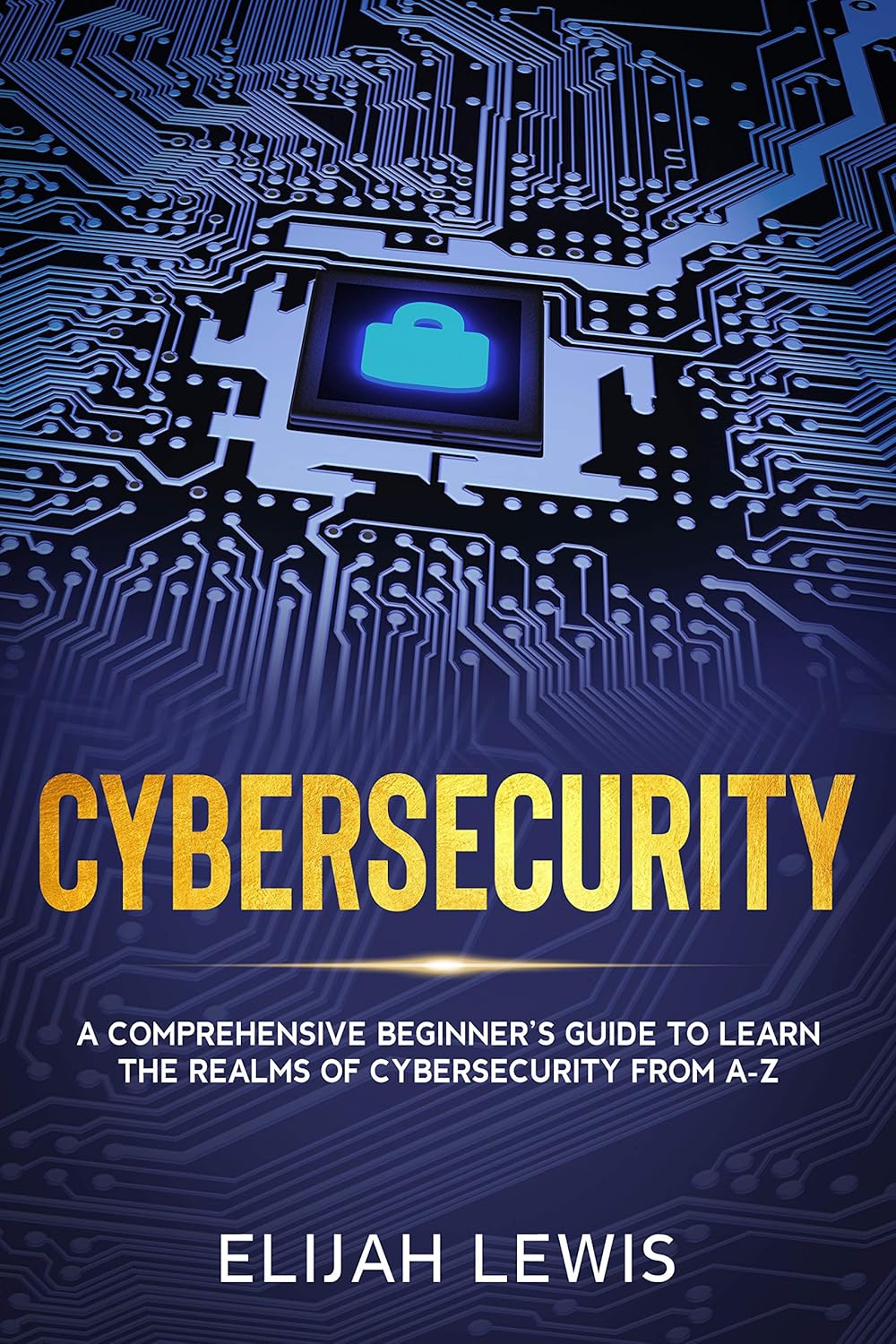

Overview of “Cybersecurity: A Comprehensive Beginner’s Guide to learn the Realms of Cybersecurity from A-Z Kindle Edition”
This book title makes a bold promise: to give you a complete, end-to-end beginner’s guide on cybersecurity. You’ll find that the author aims to combine foundational theory with real-world context, trying to make technical ideas accessible without oversimplifying them.
What the book tries to achieve
The main goal is to help you move from absolute beginner to someone who understands essential cybersecurity concepts, common threats, and defensive practices. The book claims to be suitable for self-study on Kindle, which is helpful if you prefer to learn on a tablet, phone, or e-reader.
Format and platform specifics
Because this is a Kindle Edition, you can expect typical e-book features like search, adjustable text size, and highlights. If you rely on paper or need printed diagrams, you should check whether the Kindle format shows images and code snippets clearly on your device.
Content breakdown
Below is a compact table to help you scan the major elements quickly. The table gives a snapshot of scope, difficulty, and approach so you can decide whether the book fits your learning style.
| Aspect | What you’ll find | Practical rating (1–5) |
|---|---|---|
| Scope | From basics (definitions, history) to applied topics (network security, cryptography basics, incident response) | 4 |
| Depth | Introductory to lower-intermediate; good for newcomers but not exhaustive for specialists | 3 |
| Hands-on labs | Some practical suggestions and walkthroughs; limited interactive labs in Kindle format | 3 |
| Technical rigor | Accurate for beginners; simplifies advanced math and protocols | 4 |
| Readability | Plain language with friendly tone; suited to non-technical readers | 5 |
| Usefulness for cert prep | Helpful for initial orientation; not a sole resource for certification exams | 3 |
Who should read this book?
This guide is aimed primarily at absolute beginners and curious professionals who want structured entry into cybersecurity. If you’re someone switching careers, an IT generalist wanting security basics, or a student evaluating whether to pursue cyber professionally, the book will likely align well with your needs.
People who will benefit most
You’ll get the most out of this book if you want a broad survey that explains why certain practices matter and how different tools and defenses fit together. It’s also a good match if you appreciate short explanations that don’t assume deep prior knowledge.
Who might need something else
If you’re already experienced in security, a network engineer, or preparing for advanced certifications like OSCP or CISSP at a professional level, you’ll find the content introductory and will need supplemental deep-dive resources. You should treat this book as a primer rather than a comprehensive professional manual.
Structure and chapter layout
The book’s structure follows a logical progression, starting with fundamentals, moving into attack types and defensive strategies, and finishing with practical career and ethical guidance. Chapters are typically short, focused, and organized so you can read them independently or follow a sequential study plan.
Chapter pacing and progression
Each chapter moves from concept to context: definitions, why it matters, common methods or tools, and then short recommended steps to practice or think about the topic. You’ll notice a steady increase in complexity that helps build confidence without overwhelming you.
Use of examples and case studies
The author includes examples and short case studies to show how theory applies in real incidents and scenarios. These narratives help illustrate points and make abstract threats feel more concrete and manageable.
Writing style and accessibility
The tone is friendly and conversational, aimed at reducing intimidation for newcomers. The explanations prioritize clarity and practical understanding over heavy jargon, so you won’t feel lost on your first read.
How approachable is the language?
You’ll appreciate short sentences and analogies that relate security concepts to everyday experiences. Complex topics such as public-key cryptography and network protocols are broken down into digestible, conceptual steps rather than mathematical proofs.
Visual aids and formatting
The Kindle Edition includes diagrams and formatted lists to guide your reading; however, the effectiveness of graphics can depend heavily on your device’s display. If you value visual learning, test the sample pages to see how diagrams render on your reader or app.
Strengths of the book
A major strength is the guided introduction to core cybersecurity topics, which helps you form connections among threat actors, attack vectors, and defensive controls. Another major plus is the pragmatic advice on how to begin practicing safely and how to think like a defender.
Diversity of covered topics
You’ll find coverage ranging from basic networking and OS concepts to malware types, social engineering, and incident response. This breadth means you can quickly build a mental map of the cybersecurity landscape.
Emphasis on mindset
The book emphasizes a security mindset—questioning assumptions, practicing safe configurations, and thinking about attacker incentives. That focus helps you adopt habits that will serve you across technologies and roles.
Weaknesses and limitations
The book is introductory by design, which means certain technical topics are not covered in exhaustive detail. If you need deep protocol analysis, hands-on labs with virtual machines, or advanced cryptographic proofs, you’ll need further resources.
Gaps in hands-on practice
Because the medium is Kindle, fully interactive exercises are limited. You should be prepared to supplement the reading with lab setups—either cloud-based or local virtual machines—to get practical experience.
Not a certification cram guide
If your goal is to pass a specific certification exam quickly, this book will help you build foundational knowledge but won’t substitute for targeted study guides, practice tests, or instructor-led courses. Use it as a support text rather than a sole exam resource.
Practicality and labs
The book encourages practical learning with recommended tools, sample commands, and step-by-step walkthroughs for basic tasks. You’ll be given enough to begin experimenting safely, though you’ll often pair these instructions with external downloads and lab environments.
Suggested lab topics
You’ll see suggestions for setting up a lab to practice packet capture, basic firewall rules, simple malware analysis using sandbox tools, and password-cracking experiments within a controlled environment. These suggestions are actionable but assume you can assemble the necessary tools on your own.
Safety and legal advice
The author stresses ethics and legal boundaries when performing tests and experiments, advising you to practice only on systems you own or have explicit permission to test. This responsible approach reduces the risk that a beginner will inadvertently engage in unsafe or illegal behavior.

Technical accuracy and currency
For the core introductory topics, the book is accurate and reliable. It avoids making speculative claims and references widely accepted practices and standards, grounding explanations in common models like the CIA triad (confidentiality, integrity, availability) and standard attack taxonomy.
How current is the content?
Because cybersecurity evolves quickly, some specific tool recommendations or threat examples may age. You’ll want to pair the book with up-to-date online resources and news feeds to stay current on the latest threats and defensive technologies.
Sources and references
The book includes references and suggested readings, which are helpful if you wish to follow up on topics. You’ll benefit from using those references as a starting point for deeper learning in specific areas.
Level of detail on core topics
The book covers essential areas—networking basics, operating system security, cryptography principles, application security, threat modeling, and incident response—with a balance between breadth and understandable depth. You’ll get the conceptual frameworks that help you reason about problems and choose appropriate countermeasures.
Networking and system foundations
You’ll learn how packets travel, what common network services do, and why misconfigurations can be dangerous. These chapters give you the vocabulary to communicate with engineers and to identify simple misconfiguration issues.
Cryptography and authentication
Cryptography is presented conceptually: why symmetric and asymmetric encryption differ, how hashing is used, and what makes a secure authentication system. The book avoids complex mathematics and focuses on practical implications, such as selecting secure algorithms and key management basics.
Career guidance and learning path
A useful part of the book is its career advice: job roles in cybersecurity, necessary skills, and how to plan a study roadmap. You’ll find actionable recommendations for certifications, portfolio projects, and networking in the security community.
Roles and career progression
The book outlines common entry roles like security analyst, SOC (Security Operations Center) technician, and junior penetration tester, explaining typical responsibilities and how to progress. You’ll get a sense of realistic expectations for salary ranges, learning curves, and next steps.
Building a portfolio
You’re encouraged to create a portfolio with capture-the-flag (CTF) write-ups, GitHub repositories with safe scripts or tools, and documented lab experiments. These artifacts are useful when applying for entry-level positions and demonstrating practical ability.
Comparison to other beginner books
Compared to classic beginner texts, this Kindle guide is more conversational and pragmatic. Some alternatives may provide more hands-on labs, classroom-style instruction, or deeper protocol references; this book trades exhaustive depth for accessibility and readability.
What it does better
You’ll appreciate how approachable the material is and how easily you can return to chapters to refresh basics. If you’ve felt overwhelmed by denser textbooks, this read will likely feel more motivating and less intimidating.
What others might offer instead
If you want a lab-heavy, interactive path or a textbook that serves as a reference for advanced configurations, other titles and online platforms will be better complements. Use this book as an entry point and combine it with hands-on platforms like TryHackMe or Hack The Box.
Recommended reading and resources to pair with this book
To build practical skills, pair the book with hands-on platforms, official documentation, and community resources. These will help you convert conceptual understanding into practical competence.
Suggested online platforms
You should try TryHackMe, Hack The Box, and interactive labs on cloud platforms to practice. Pairing those with this book’s conceptual chapters will accelerate your learning and help you internalize defensive and offensive techniques safely.
Additional books and references
Consider adding a more technical networking textbook, a dedicated cryptography primer, and a hands-on penetration testing guide as follow-ups. You’ll want to read official documentation for tools you use and follow reputable blogs and threat intelligence sources.
Accessibility and Kindle features
Because it’s a Kindle Edition, the text is portable and searchable, which is convenient when you’re reviewing definitions or keywords on the go. You can highlight passages and export notes, which is helpful for study and revision.
How to get the most out of the Kindle format
You should take advantage of the highlight and notes functions to mark definitions, commands, and tool recommendations. Consider syncing your notes with another note-taking app to build a consolidated study resource.
Limitations on embedded media
If the book includes code blocks or diagrams, some do not render perfectly on smaller e-readers. You’ll want to view those pages on a tablet or desktop Kindle app if you rely on diagrams to learn.
Ethical considerations and responsible learning
The author places strong emphasis on ethical conduct and legal boundaries, which is essential for beginners. You’ll learn why consent, disclosure, and professional responsibility matter as you gain practical skills.
Developing a security mindset
The book stresses that security isn’t just tools and techniques—it’s a set of practices and ethics you bring to every decision. You’ll be encouraged to think critically about risk, impact, and proportional responses.
Avoiding harmful experimentation
You’re repeatedly cautioned against unauthorized testing and urged to use isolated lab environments. This repeated emphasis helps prevent beginners from making unethical or illegal mistakes.
Pricing and overall value
Given its scope, readability, and emphasis on practical next steps, the book offers good value for those beginning their journey in cybersecurity. If you prize clarity and approachable structure over extreme technical depth, this is a solid purchase.
Cost-effectiveness for learners
For the price you pay for a Kindle Edition, you’ll get an inexpensive primer that organizes your initial learning and points you to further resources. The time you save by avoiding scattered or confusing sources can make the book worthwhile.
When it might not be worth it
If your goal is immediate certification, deep technical mastery, or interactive labs included in the purchase price, you might find better value in bundled courses or lab subscriptions. Consider your goals before buying.
Reading strategies to get the most from the book
You should read with a laptop or VM ready so you can pause and try the suggested commands and mini-exercises. Take notes, test basic concepts in a sandbox environment, and use the references to deepen any particular area that interests you.
Active learning tips
Rather than passively reading, set small goals for each chapter—such as configuring a simple firewall rule or capturing network traffic—to cement concepts. Use flashcards for key terms and schedule regular review sessions to prevent forgetting foundational ideas.
Study cadence suggestions
You’ll learn best by alternating reading with short, focused lab sessions. Spend a week on networking fundamentals, another on authentication and cryptography basics, and then run a small incident response simulation to bring things together.
Final recommendations
“Cybersecurity: A Comprehensive Beginner’s Guide to learn the Realms of Cybersecurity from A-Z Kindle Edition” is best used as an accessible starting point that builds your confidence and gives you a practical roadmap. You should use it as the foundation of a broader learning plan that includes hands-on labs, community interactions, and specialized follow-up texts.
Who should buy it now
If you’re starting from scratch and want a clear, friendly guide that helps you understand the key building blocks and next steps, this book is a very sensible purchase. It will save you time in figuring out which topics matter most and how to begin practicing safely.
What to pair with this book
Pair it with an interactive lab service, a networking fundamentals text, and some current blogs or news feeds to keep your knowledge current. Add community engagement—forums, local meetups, or online study groups—to accelerate learning and gain mentorship.
Final verdict
You’ll find this Kindle Edition to be a practical, well-structured primer that makes cybersecurity approachable and actionable for beginners. It’s not the last stop on your journey, but it’s a supportive and clearly written first step that helps you build a foundation and chart a path toward competence and confidence in cybersecurity.

Disclosure: As an Amazon Associate, I earn from qualifying purchases.