Have you ever wished your teen could learn serious online-safety skills while having fun with coloring pages, puzzles, and mazes?
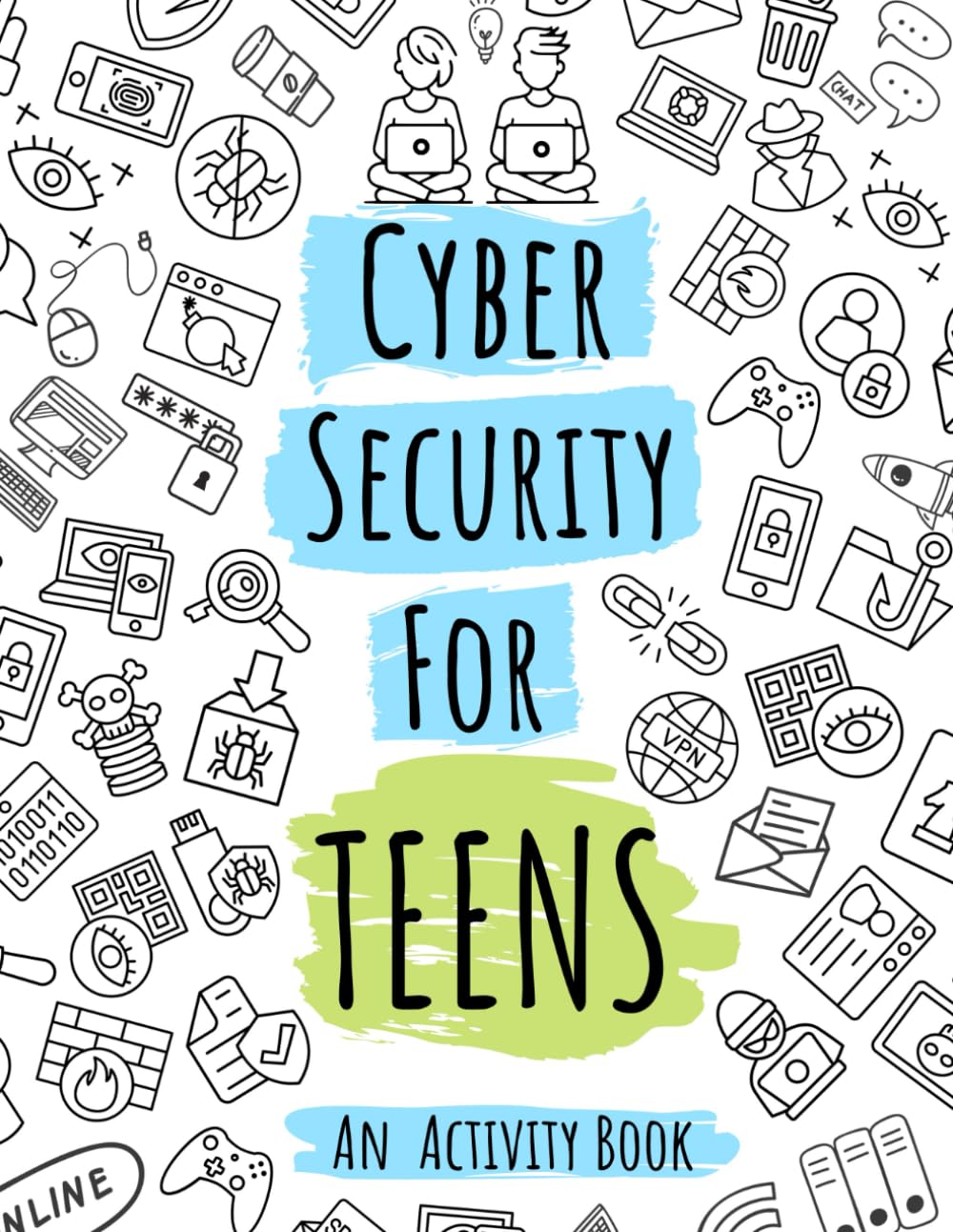

First impression of “Cybersecurity Activity Book for Teens: Learn about Online Safety and Privacy while Coloring, Solving Word Puzzles, Mazes and more. Paperback – November 1, 2022”
You’ll notice right away that the title tells you exactly what the book aims to do: combine creative activities with cybersecurity lessons. The bluntness of the title helps set expectations so you can judge if it’s the right fit for your teen or classroom without needing to read the entire product description.
Physical feel and packaging
When you pick up the paperback, you can expect a lightweight, workbook-like feel that makes it easy to carry or keep in a backpack. The paperback format also means you can write directly in the book, tear out pages if needed, and keep it accessible for repeated use.
What’s inside the book
You’ll find a mixed collection of activities focused on online safety and privacy paired with fun puzzles and coloring elements. The activities are designed to be approachable and interactive, aimed at getting teens thinking about real-life online choices rather than just reading dry facts.
Types of activities included
The book mixes coloring pages, word puzzles, crossword-style activities, mazes, matching exercises, and short scenario-based questions. This mix helps maintain focus for teens who might get bored with long blocks of text, letting them learn by doing and reflecting.
Theme coverage and scope
The core themes revolve around online safety, privacy, passwords, social media etiquette, phishing, device security basics, and safe browsing practices. While it doesn’t replace formal cybersecurity education, it introduces concepts in an accessible way that prepares teens for more advanced conversations.
Educational value
You’ll find that the book balances learning objectives with playful tasks to encourage retention through engagement. The activities encourage critical thinking by putting teens in realistic scenarios where they must decide how to act or respond.
How the book teaches concepts
Instead of lecturing, the book prompts teens to apply ideas via puzzles and scenarios, helping them internalize lessons like recognizing risky links or crafting stronger passwords. Repetition through different activity types reinforces core messages without feeling repetitive.
Cognitive and behavioral outcomes
By completing the puzzles and activities, your teen can improve pattern recognition (useful for spotting scams), vocabulary around security terms, and decision-making regarding their online behavior. The book also builds awareness that certain actions have privacy consequences, increasing mindfulness about digital footprints.
Design, illustrations, and visual appeal
You’ll notice the visual design aims to be teen-friendly without being childish, using bold lines for coloring and clear, readable fonts for puzzle instructions. The imagery supports the concepts—devices, icons, and simple character sketches—so ideas aren’t abstract or intimidating.
Coloring pages and aesthetic choices
The coloring pages are more functional than elaborate art pieces, giving teens room to personalize and reflect while they color. This helps if you want to use the book for calming activities or as a break between more demanding lessons.
Puzzle layout and readability
Puzzles and mazes are laid out with enough white space to prevent visual overload and make following the flow easy. Instructions are short and direct, so teens can jump into activities quickly without needing adult interpretation for every page.
Age appropriateness and difficulty
You’ll find the book pitched to teenagers, which means the language, scenarios, and challenges are meant to be relatable to ages roughly from early to middle teens. The tasks are designed to be neither too trivial nor overly technical, making them a good bridge from basic awareness to practical habits.
Recommended age range
The content suits roughly ages 12–17, depending on reading level and prior exposure to digital topics. Younger teens will enjoy the creative elements, while older teens may appreciate the real-world scenarios and practical tips.
Differentiation for different learners
If your teen is tech-curious, the book offers enough to provoke questions and spark deeper exploration. If they’re less motivated by tech, the coloring and puzzle aspects provide gentler entry points into important discussions about safety and privacy.
Usability and durability
You’ll be able to use the paperback for repeated sessions, and its written activities mean it can be tackled in short bursts or as longer guided lessons. Pages are typically single-sided in many activity books to allow for coloring without bleed-through, though you should check before using wet markers.
How intuitive is the layout
The structure is intuitive: activities are grouped by theme rather than random, and the instructions are short so teens can work independently. If you plan to use the book in a classroom, it’s easy to assign specific pages or types of tasks by topic.
Activity breakdown table
This table helps you quickly see what kinds of activities are included, what skills they build, and who each activity is best for.
| Activity Type | Educational Goal | Estimated Time | Difficulty | Best For |
|---|---|---|---|---|
| Coloring pages | Reinforce themes visually, encourage reflection | 5–15 minutes | Easy | Creative teens, calming sessions |
| Word puzzles | Vocabulary building, term recognition | 10–25 minutes | Medium | Teens learning new technical words |
| Mazes | Focus and pattern recognition | 5–15 minutes | Easy | Short breaks, younger teens |
| Scenario questions | Decision-making, ethical reasoning | 10–20 minutes | Medium | Group discussions, reflective work |
| Crosswords & matching | Recall and reinforce key cybersecurity terms | 10–30 minutes | Medium | Test-style review, quiet study |
| Practical tasks | Apply security steps, create secure passwords | 15–30 minutes | Medium | Hands-on learners, classroom demos |
You’ll find the table gives a clear snapshot so you can pick activities based on available time and objectives. The times are estimates because individual speed and engagement will vary.

Topics that matter: online safety concepts taught
You’ll see the book covers everyday risks like phishing emails, suspicious links, password management, privacy settings, and social media posting. It focuses on choices teens make daily rather than deep technical defenses, which makes it practical for immediate behavior change.
Passwords and authentication
The activities guide your teen through the basics of strong passwords and why reusing passwords is risky, often using playful prompts to create memorable password strategies. This approach helps the concept stick because teens practice in an engaging, low-pressure context.
Social media behavior and privacy settings
You’ll get scenarios that mimic real social media dilemmas—sharing photos, friend requests, or oversharing—and exercises that encourage conservative privacy settings and thoughtful posting. The book emphasizes consequences rather than fear, so teens can think critically about what they post.
Privacy and personal data lessons
You’ll see lessons designed to make teens aware of what personal data is, how it’s collected, and why it matters. Rather than making them anxious, the book aims to equip them with simple habits to reduce unnecessary data exposure.
Personal information and digital footprint
Activities ask your teen to consider what information they would share and what could be sensitive, helping them build a mental checklist for posts and profiles. This repeated practice helps develop a habit of pausing before sharing, which is one of the simplest defenses against overexposure.
Recognizing scams and deceptive design
You’ll find exercises that simulate phishing attempts and misleading UI elements so teens can practice spotting red flags. These practical examples build pattern recognition that can translate into safer choices when they encounter real scams.
Engagement strategies and motivational elements
You’ll appreciate that the book uses variety to keep attention—if one activity feels boring, another will likely reconnect your teen with the topic. The activities reward completion with a sense of progress and accomplishment, which can motivate repeated use.
Gamification and challenge
Some puzzles are structured like small challenges that let teens measure how quickly they can solve a maze or finish a crossword, encouraging friendly competition. You can use these as timed classroom activities or informal contests at home to make learning social and fun.
Reflection prompts and journaling moments
The book includes short reflection prompts that ask teens to write or draw their responses, turning activities into opportunities for self-assessment. These prompts are great conversation starters for parent-teen chats about online habits.
How to use the book with teens at home
You’ll find it easy to integrate pages into short daily or weekly routines, letting your teen work alone or with you. Use a coloring page as a calm activity after school and a scenario question as a conversation starter at dinner.
Structuring a session
Start with a quick warm-up (a maze or coloring page), move to a word puzzle to reinforce vocabulary, and finish with a scenario that asks your teen to apply what they learned. This sequence mirrors how you might scaffold learning in a classroom: warm-up, practice, and application.
Involving parents or guardians
You can use the book as a tool to open dialogue about online behavior, using scenario answers as prompts for deeper conversation. Don’t treat it like a test—treat it like a shared activity that you both can learn from without judgment.
Using the book in classrooms and clubs
As an educator, you’ll find this book useful for short lessons, club activities, or homework assignments that build digital citizenship skills. Its mix of activities fits into a single lesson or can be spread out across several sessions.
Lesson planning ideas
Assign specific pages that match your lesson objective and use the scenario questions as prompts for group discussion or role-play. You can have pairs complete a crossword and then debate responses to a phishing scenario, fostering collaboration and critical thinking.
Assessment and reinforcement
You can use the practical tasks to check comprehension informally, or create rubrics around decision-making in scenarios to formally assess progress. The book’s activities are handy for formative assessment because they show how teens apply knowledge, not just recall facts.
Pros and cons
You’ll appreciate several clear strengths of this approach: accessibility, creativity, and practical focus. There are trade-offs, too—while it introduces core ideas, it won’t replace more technical or in-depth cybersecurity training.
Strengths
The book makes important topics approachable and relevant to teens’ daily lives, combining learning and leisure effectively. It’s portable, low-pressure, and useful for both individual and group settings, helping spark conversations parents and teachers might otherwise struggle to start.
Limitations
Because it’s activity-focused and aimed at general awareness, it doesn’t go deep into technical defenses like secure protocols, encryption, or advanced threat analysis. Also, the presence of coloring and games may make it less appealing to teens looking for a wholly serious treatment of cybersecurity.
Comparison with other resources
You’ll want to consider this book alongside interactive online modules, videos, and classroom curricula that provide more depth or hands-on technical labs. Use this workbook as a complementary resource that builds foundational habits and awareness.
When to pair it with other materials
Pair it with short online tutorials or teacher-led workshops that demonstrate practical steps (like enabling 2FA, installing updates, or configuring privacy settings). That way, the book handles awareness and reflection while other materials provide applied, technical skills.
Practical tips to get the most from the book
You’ll get more value if you treat the activities as starting points for conversation rather than endpoints. Ask follow-up questions, encourage your teen to explain their choices, and help them apply ideas to their accounts and devices.
Creating follow-up activities
After finishing a scenario, have your teen perform a real-world task—change a password, check privacy settings, or delete old posts. These small actions reinforce learning and turn theoretical knowledge into practical habit.
Encouraging ongoing practice
Schedule short weekly sessions to keep the topics fresh and use the book as a recurring resource for revision. Gamify progress with incentives or track improvements in decision-making to sustain engagement.
Conversation starters and reflection prompts
You’ll find the book’s scenarios are perfect for sparking meaningful chats about online behavior and consequences. Use the prompts to ask open-ended questions that help your teen reflect on their choices.
Sample questions to ask after an activity
Ask: What would you do differently now? How might someone use your public posts against you? Would you trust that link—why or why not? These kinds of questions push teens to articulate reasoning, strengthening understanding.
Who should buy this book
You’ll likely consider this book if you’re a parent, guardian, or educator seeking approachable ways to teach teens about online safety. It’s also useful for youth group leaders and digital-literacy clubs that want low-prep materials.
Ideal settings for use
The book shines in informal educational settings, one-on-one parent-teen time, after-school programs, and short classroom lessons. It’s less suited as a standalone teaching unit for an advanced cybersecurity course, but excellent as part of a broader program.
Final thoughts and recommendation
You’ll find that “Cybersecurity Activity Book for Teens: Learn about Online Safety and Privacy while Coloring, Solving Word Puzzles, Mazes and more. Paperback – November 1, 2022” is a practical, friendly entry point into digital safety topics. If your goal is to raise awareness, prompt conversation, and build basic habits in a low-stress way, this book does that job well and is worth adding to your teaching or parenting toolkit.

Disclosure: As an Amazon Associate, I earn from qualifying purchases.