Would you like a clear, practical review of the “NIST Cybersecurity Framework (CSF) For Information Systems Security” so you can decide whether it fits your organization and how to get started?
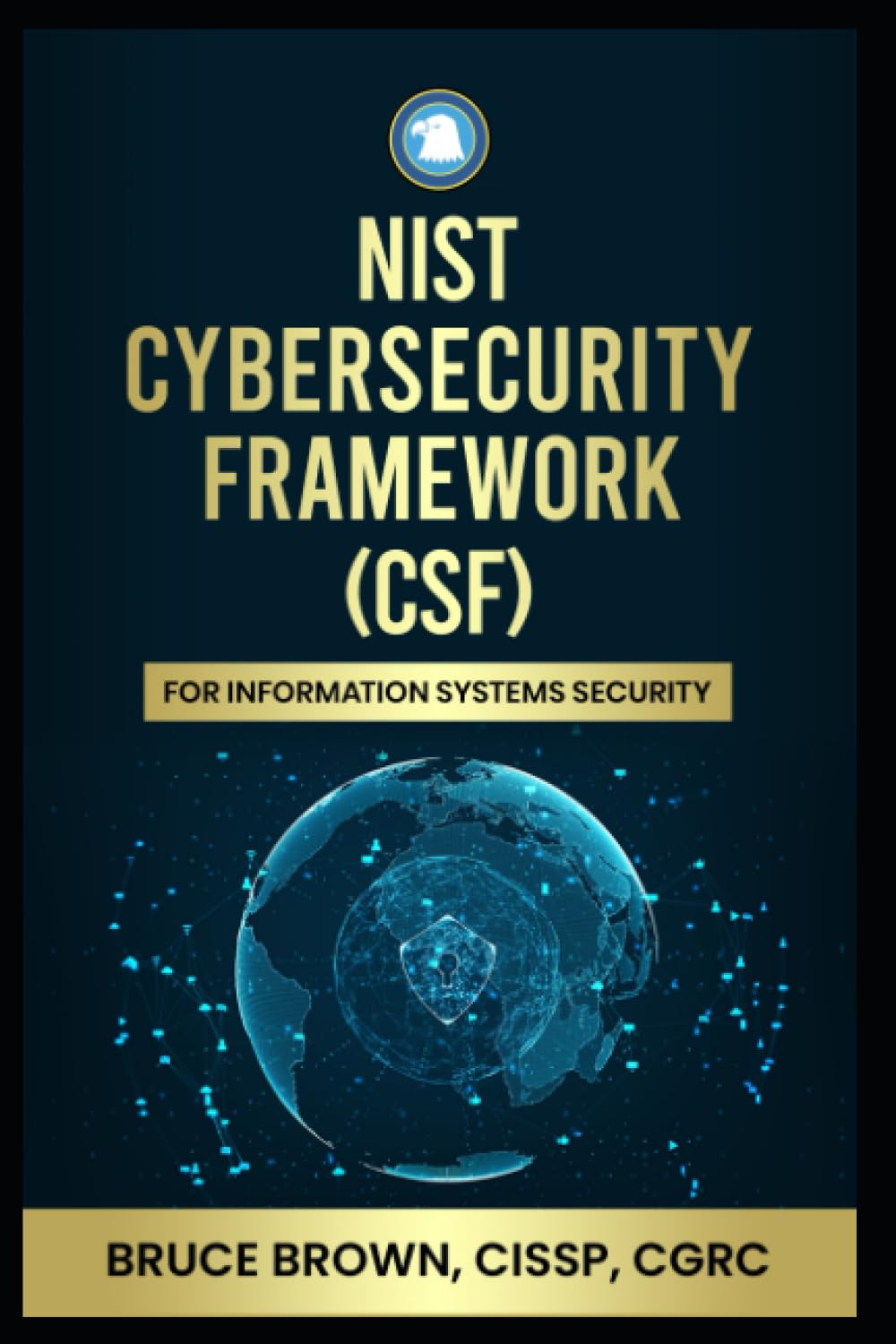

Product Overview
You’ll find the NIST Cybersecurity Framework (CSF) For Information Systems Security is designed as a risk-based, flexible approach to strengthen your cybersecurity posture across people, processes, and technology. The framework isn’t prescriptive; it gives you a common language and structure so you can align security activities with business needs and regulatory requirements.
What the NIST CSF Actually Is
The CSF is a voluntary framework developed by the U.S. National Institute of Standards and Technology to help organizations manage cybersecurity risk. You can use it to assess your current state, define a target state, and plan prioritized actions to reduce risk.
Who Should Use This Product
If you’re responsible for information security, risk, compliance, or IT operations in any organization — private sector, government, or nonprofit — the CSF is relevant. It scales from small teams wanting basic guidance to large enterprises building integrated risk programs.
Core Components and Structure
The framework is organized around five high-level Functions, supporting Categories and Subcategories, and informative references you can map to standards and controls. This structure makes it practical for both governance-level conversations and hands-on implementation work.
The Five Functions
These five Functions give you a simple, memorable model for cybersecurity activities that align with lifecycle stages. You’ll use them to create profiles and measure progress against your target state.
| Function | Purpose | Typical Activities | Example Outcomes |
|---|---|---|---|
| Identify | Understand assets, risks, and business context | Asset inventory, risk assessments, governance policies | Prioritized risk register, ownership map |
| Protect | Implement safeguards to limit impact of incidents | Access control, training, data protection, maintenance | Hardened systems, encryption, workforce awareness |
| Detect | Find cybersecurity events in time | Monitoring, anomaly detection, logging | Alerts, detection playbooks, improved visibility |
| Respond | Take action on detected incidents | Incident response plans, communications, containment | Reduced impact, coordinated response, lessons learned |
| Recover | Restore services and learn from events | Backup, recovery planning, post-incident reviews | Faster restoration, improved resilience, updated plans |
Tiers and Profiles
The framework provides Implementation Tiers to describe the degree of rigor and sophistication in your approach, and Profiles to map current and target states. You’ll use Tiers to communicate maturity to leadership and Profiles to prioritize actions.
Key Features and Capabilities
You’ll get a flexible, risk-focused structure, mapping to other standards, and business-oriented language that helps security and executives align. The CSF also supports integration into procurement, vendor risk management, and supply chain risk processes.
Implementation Guidance and Mapping
The CSF includes informative references that let you map Subcategories to NIST SP 800-53, ISO 27001, COBIT, and others, so you can reuse controls and evidence across frameworks. This mapping simplifies audits and helps you avoid duplication of effort when you maintain compliance across multiple standards.
Measurement and Metrics
The framework encourages you to define metrics tied to business outcomes, not just technical indicators, so you can demonstrate value and risk reduction. You’ll track KPIs like time-to-detect, mean-time-to-recover, patching cadence, and percent of critical assets inventoried.
Benefits of Using This Product
You can expect clearer communication about cybersecurity risk, better prioritization of investments, and a repeatable approach to building resilience. The CSF’s vendor-agnostic nature also makes it easier to adopt best practices without being locked into a specific product.
Risk Reduction and Communication
By focusing on business functions and outcomes, the framework helps you translate technical measures into business impact, which makes risk conversations more actionable. You’ll be able to present prioritized remediation plans tied to risk tolerance and business goals.
Regulatory and Vendor Confidence
Adopting the CSF can improve third-party confidence and simplify interactions with regulators because it demonstrates a structured, recognized approach to cybersecurity risk management. You’ll find that many partners and customers view CSF adoption favorably during procurement and due diligence.
Limitations and Considerations
Although the CSF is highly valuable, it’s not a step-by-step technical playbook and requires interpretation, tailoring, and investment to be effective. You’ll need to plan for organizational change management and possibly acquire expertise to map the framework to your environment.
Resource and Cost Implications
The framework itself is free, but implementing it can require staff time, tools, training, and external support, depending on your baseline maturity. You should budget for discovery work, remediation projects, monitoring tools, and governance activities.
Need for Tailoring and Expertise
Because the CSF is intentionally flexible, you’ll have to tailor it to your organization’s size, sector, and risk profile, and that often needs subject-matter expertise. If you try to apply it generically, you risk creating a framework that is neither actionable nor measurable.
How to Implement: Step-by-Step Plan
You’ll get the most value by following a staged approach that aligns with your business objectives and resource constraints. Below is a practical sequence you can adopt to implement the CSF without overwhelming your team.
Step 1: Secure Executive Sponsorship
You need leadership buy-in to allocate budget, remove organizational roadblocks, and sustain change over time. Executive sponsorship also helps you set risk tolerance, clarify business priorities, and gain support for cross-functional coordination.
Step 2: Establish Governance and Roles
Define who owns the framework, who measures outcomes, and which teams will operationalize controls across IT, security, legal, HR, and business units. Clear roles reduce handoff friction and ensure accountability during incidents.
Step 3: Conduct Asset and Dependency Discovery
Inventory hardware, software, data, and third-party dependencies so you can properly scope risk assessments and control coverage. Accurate inventories let you prioritize protection for critical assets and identify single points of failure.
Step 4: Perform a Current-State Assessment
Use the CSF to produce a Current Profile that documents your existing practices mapped to Functions, Categories, and Subcategories. This assessment gives you a baseline to measure progress and helps you identify the most critical gaps.
Step 5: Define Your Target Profile and Priorities
Work with stakeholders to set a Target Profile that reflects acceptable risk and regulatory obligations, then prioritize Subcategories for remediation based on risk and value. Prioritization ensures you focus on controls that reduce the most significant risks first.
Step 6: Develop a Roadmap and Allocate Resources
Create a phased implementation plan with milestones, owners, budgets, and success criteria. You’ll want near-term wins to build momentum and longer-term projects for systemic improvements.
Step 7: Implement Controls and Tools
Execute on prioritized projects like access management, endpoint hardening, encryption, logging, and incident response tooling. Integrate automation where possible to scale controls and reduce manual burden.
Step 8: Operationalize Monitoring and Detection
Deploy SIEM or managed detection, tune alerts, and establish escalation paths so you can detect and act on incidents in a timely manner. Regularly validate monitoring coverage against critical assets and attack scenarios.
Step 9: Test Response and Recovery Capabilities
Run tabletop exercises, simulate incidents, and test recovery processes to ensure plans are effective and staff are ready. Lessons learned from exercises should feed back into your roadmap and controls.
Step 10: Continuous Measurement and Improvement
Establish KPIs and review them regularly to measure progress toward your Target Profile, then iterate and reprioritize based on metrics and threat changes. Continuous improvement keeps the program aligned with evolving risks and business needs.
Implementation Timeline and Resource Table
You’ll find a realistic picture of time and personnel needs helps you plan budget and expectations. The following table gives a high-level view; tailor it to your organization’s size and complexity.
| Phase | Typical Duration | Core Activities | Typical Team Involved |
|---|---|---|---|
| Discovery & Assessment | 1-3 months | Asset inventory, risk assessment, current profile | 1-2 analysts, security lead, IT ops |
| Prioritization & Roadmap | 1 month | Target profile, project planning, budgeting | CISO, risk manager, stakeholders |
| Initial Controls (MVP) | 3-6 months | IAM, patching, backups, logging | Security engineers, IT, vendor partners |
| Monitoring & Response | 3-6 months | SIEM, detection rules, IR plan | SOC staff, incident handlers |
| Continuous Improvement | Ongoing | Metrics, exercises, remediation | Security operations, governance |

Tools and Integrations
You’ll implement the CSF most efficiently when you link it to tools for governance, monitoring, identity, and vulnerability management. Choose solutions that provide evidence, reporting, and API integrations to simplify measurement and compliance.
SIEM, GRC, IAM, MDM, Vulnerability Scanners
These categories are core to implementing CSF Subcategories: SIEM supports Detect, GRC tools map and report the Profile, IAM covers Protect, MDM helps with endpoint protection, and scanners support Identify and Protect. Evaluate vendors for analytics, scalability, and ease of integrating with your existing toolchain.
Comparison with Alternatives
You’ll likely compare CSF to frameworks like ISO 27001, CIS Controls, and NIST SP 800-53; each has different emphasis and use cases. CSF is a framework for risk management and communication, while others are more prescriptive or controls-focused.
NIST CSF vs ISO 27001
CSF is more flexible and business-focused; ISO 27001 provides a formal certification process and a more prescriptive Information Security Management System approach. You can use CSF to help achieve ISO 27001 goals by mapping CSF Subcategories to ISO controls.
NIST CSF vs CIS Controls
CIS Controls are a prioritized set of technical controls that give direct implementation guidance, whereas CSF organizes risk management at a higher level and helps you choose which controls to adopt. Many organizations use CIS Controls as part of the Protect and Detect activities within a CSF implementation.
Common Pitfalls and How to Avoid Them
You’ll avoid common mistakes when you approach the CSF as a practical change program rather than a checkbox exercise. Below are pitfalls to watch for and ways to mitigate them.
Overly Ambitious Scope
Trying to remediate everything at once spreads resources thin and causes initiative fatigue. Start with high-value assets and critical controls, achieve measurable wins, then expand your scope.
Ignoring Business Context
If you don’t align security activities with business objectives, you’ll implement controls that satisfy technical ideals but don’t reduce meaningful risk. Involve business stakeholders early to ensure controls address the right threats and impacts.
Focusing Only on Tools
Buying technology without process changes and user adoption will leave gaps. Pair tools with policies, training, and governance to make sure tools are tuned, used, and supported.
Case Studies and Use Scenarios
You’ll get a better feel for how the CSF applies by reading condensed scenarios that mirror real-world needs. These examples show how organizations of different sizes and risk profiles can use the framework.
Case Study 1 — Small Financial Services Firm
A small financial firm used the CSF to prioritize protective controls for customer data and payments, focusing on Identify and Protect functions first. Within six months, they improved access controls and logging, decreasing the time to detect suspicious transactions.
Case Study 2 — Mid-Sized Manufacturing Company
A manufacturer facing supply chain risk used CSF Profiles to standardize vendor security requirements and mapped those to procurement processes. The result was clearer contractual terms, fewer unvetted third parties, and improved visibility into supplier controls.
Case Study 3 — Large Healthcare Provider
A hospital system employed the CSF to coordinate clinical systems, medical devices, and IT operations, aligning cybersecurity objectives with patient safety goals. They implemented incident playbooks and recovery exercises, reducing downtime for critical services and improving audit readiness.
Pricing and ROI Considerations
The CSF itself is free, but your implementation will incur costs for people, tools, and projects; budget planning should reflect short- and long-term investments. You’ll also need to factor in training, governance time, and potential external consulting if you lack internal expertise.
Estimating Implementation Costs
Costs vary widely by maturity and industry; initial small deployments might be achievable for tens of thousands of dollars, while enterprise-wide rollouts can exceed six figures. Estimate costs for gap remediation, tool licensing, staffing, and training to build a realistic budget.
Ways to Demonstrate ROI
Show ROI by measuring reduced incident impact, faster recovery times, improved audit outcomes, and avoided regulatory fines. You can also demonstrate value through decreased downtime, lower insurance premiums, and higher customer confidence.
Audit, Certification, and Continuous Improvement
You’ll use CSF artifacts—Profiles, roadmaps, and metrics—as part of evidence for internal and external assessments, even though CSF itself is not a certifiable standard. The framework supports continuous improvement with iterative reviews and updates based on metrics and changing threat landscapes.
How to Prepare for Audits
Maintain traceable mappings between CSF Subcategories and implemented controls, collect evidence, and produce a current Profile to show your starting point and progress against targets. Regular internal reviews and evidence collection reduce the stress and time for formal audits.
Continuous Improvement Cycle
Treat the CSF as a living program: assess, plan, implement, measure, and refine. Regularly review your Target Profile, adapt to new threats, and update priorities to keep your security posture aligned with risk appetite.
Frequently Asked Questions (FAQ)
You’ll have practical questions as you consider adoption; here are common ones with concise answers to help you decide and plan.
Is the NIST CSF mandatory for my organization?
No, the CSF is voluntary, though regulators or customers may expect its principles or similar risk management practices in certain sectors. You should check industry-specific regulations to determine if additional controls or certifications are needed.
How long does it take to implement the CSF?
Timeframes depend on your starting point; a basic program with prioritized controls can show results within months, while full enterprise adoption can take 12–24 months or more. Focus on iterative delivery and measurable milestones to show progress.
Do I need external consultants to implement the CSF?
You don’t have to hire consultants, but external expertise can accelerate assessments, gap analysis, and mapping to technical controls—especially if your team lacks experience. Consultants can also provide benchmarking and maturity assessments that help set realistic goals.
Can the CSF help with regulatory compliance?
Yes, CSF provides a flexible framework to help you meet regulatory objectives by mapping its Subcategories to specific regulatory requirements. Use informative references and mappings to demonstrate how CSF-aligned controls satisfy those requirements.
How does the CSF work with cloud services and third parties?
Use the Identify and Protect functions to inventory cloud services and third-party relationships, then apply appropriate controls for configuration management, monitoring, and contractual obligations. Profiles and priority lists help you allocate oversight and remediation efforts for vendors.
What metrics should I track first?
Start with measurable, high-impact metrics like time-to-detect, patch compliance for critical systems, percent of critical assets inventoried, and time-to-recover for core services. These metrics align closely with CSF Functions and help you communicate progress to leadership.
Checklist for Your First 90 Days
You’ll want a checklist to keep early activities focused and achievable; below are the high-priority items to complete in the first three months.
- Secure executive sponsorship and define success criteria.
- Inventory critical assets and data flows.
- Produce a Current Profile and identify top 10 Subcategory gaps.
- Implement rapid protective measures for critical findings (access controls, patching).
- Establish basic monitoring and incident escalation procedures.
- Schedule tabletop exercise and define roles for incident response.
Complete these items to create momentum and justify further investments.
Metrics and Reporting Templates
You’ll benefit from consistent metrics and dashboarding to show progress to stakeholders. Consider dashboard items such as percent of Subcategories achieved, trend of detection and response times, and remediation backlog by priority.
Example Dashboard Elements
Include high-level metrics for executives and operational metrics for SOC and IT teams so reporting remains relevant at each level. Executive dashboards should focus on risk exposure and trend lines, while operational dashboards show specific actions and outstanding tasks.
Organizational Roles and Responsibilities
You’ll need clear accountability to make the CSF operational. Define roles like CISO (program lead), risk manager (assessment and metrics), security architect (controls design), SOC (detection and response), and business unit owners (asset custodians).
RACI for CSF Implementation
Create a RACI matrix showing Responsible, Accountable, Consulted, and Informed parties for key activities like risk assessment, control implementation, monitoring, and incident response. This reduces ambiguity and speeds decision-making.
Final Verdict
If you want a pragmatic, business-aligned way to manage cybersecurity risk, the NIST Cybersecurity Framework (CSF) For Information Systems Security is a strong choice because it offers flexibility, broad mappings to standards, and a lifecycle approach. You’ll get the most value when you tailor the framework to your context, secure leadership support, and commit to iterative measurement and improvement.
Next Steps You Should Take
Start with a short, focused assessment to produce a Current Profile, gain executive buy-in for a prioritized roadmap, and implement high-impact controls first. Keep your effort pragmatic, measurable, and aligned to business priorities so you can demonstrate value quickly and sustain the program long term.

Disclosure: As an Amazon Associate, I earn from qualifying purchases.