?Are you looking for a book that helps you understand how states behave when computers and networks are part of national power?
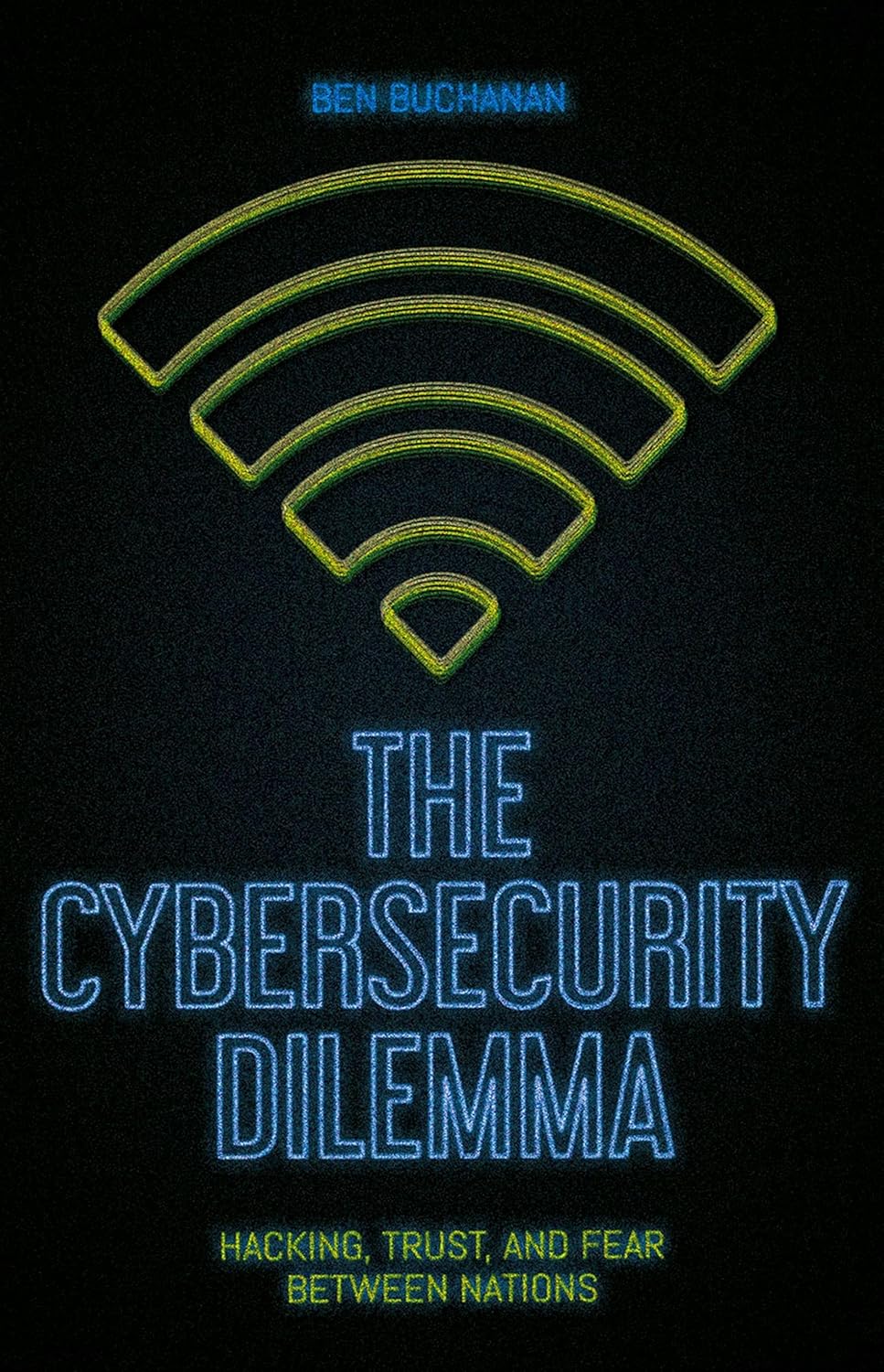

Quick summary of The Cybersecurity Dilemma: Hacking, Trust and Fear Between Nations 1st Edition
You’ll find this book is a thoughtful intersection of international relations and cybersecurity policy, aimed at explaining why states misinterpret each other’s behavior online. It frames cyber interactions through traditional security concepts and shows why familiar problems like mistrust and miscalculation are magnified in cyberspace.
Who the book is for
You’ll appreciate this book if you want to bridge technical details and strategic thinking, whether you’re a policy maker, student, researcher, or security practitioner. It’s written to be accessible without assuming deep coding knowledge, so you can follow the argument even if you don’t work with networks every day.
About the author
You’ll notice the author brings both policy and academic perspective to the subject, combining real-world episodes with theoretical clarity. That background helps the author explain not only what happened in notable incidents, but also why they matter for how nations respond to cyber actions.
Central argument and framing
You’ll get a core claim that cyberspace creates its own version of the “security dilemma”: actions one state takes to increase its security can inadvertently threaten others, prompting escalation. The book argues that technical features of cyber operations—like difficulty in attribution and the dual-use nature of tools—intensify misperception and risk.
The security dilemma applied to cyberspace
You’ll see the argument that cyber weapons and espionage are often ambiguous: a vulnerability probe can look like preparation for attack, and a defensive measure can resemble an offensive posture. That ambiguity means you can misread intentions and respond in ways that worsen insecurity.
Attribution, signaling, and misperception
You’ll understand why attribution (figuring out who did something) is hard in cyber incidents and why that shapes state behavior. The book explains how signaling becomes noisier online: actions meant to deter or reassure can be missed, misunderstood, or used by others as pretext for countermeasures.
Structure and style of the book
You’ll find the book organized to take you from conceptual foundations to historical case studies and policy implications. The prose balances narrative and analysis so you can follow episodes and extract higher-level lessons.
Presentation and readability
You’ll notice the writing aims to be clear and engaging, with examples that illustrate rather than obscure the argument. Technical jargon is minimized or explained, so you can keep focus on the strategic implications without getting lost in low-level details.
Case studies and examples
You’ll see cases chosen to highlight the core dilemmas in cyberspace: attribution challenges, signaling problems, and the interplay between civilian infrastructure and military effects. These real-world illustrations help make abstract points concrete and show how actors responded in practice.
Table: Thematic breakdown for quick reference
You’ll find this table useful if you want a concise snapshot of what the book covers and what to expect from each theme.
| Theme | What it covers | Why it matters | How you’ll use it |
|---|---|---|---|
| Security dilemma in cyber | How cyber tools create mutual insecurity | Explains cyclical escalation risks | Frames policy choices and unintended consequences |
| Attribution and evidence | Technical and political limits to blame assignment | Shows why uncertainty shapes responses | Shapes how you assess claims after incidents |
| Signaling and deterrence | How states try to communicate and enforce norms | Reveals weaknesses of classic deterrence online | Helps design clearer, credible policies |
| Offensive vs. defensive balance | Whether offense or defense has advantage in cyberspace | Influences strategy and investment choices | Guides prioritization in policy or budgets |
| Norms and governance | International law, norms, and possible cooperative steps | Offers pathways to reduce misperception | Informs diplomatic and institutional initiatives |
| Case studies | Historical incidents and state practices | Demonstrates theory in practice | Aids your operational and scholarly understanding |
Deep look at key themes
You’ll want a deeper grasp of the main themes because they’re the parts you’ll apply in meetings, memos, or coursework. The following sections break the concepts down with an eye toward practical relevance.
Why ambiguity matters more in cyberspace
You’ll realize that cyber operations can be performed covertly, routed through third parties, and designed to look like accidents. This creates an environment where you can rarely be certain about who is responsible or what their broader strategy might be, making rational responses harder.
The role of technological features
You’ll see that attributes like fragility of software, widespread reuse of tools, and the speed of networked events change the dynamics of conflict. These features can make single incidents cascade into diplomatic crises if not managed carefully.
Psychological and organizational factors
You’ll learn how cognitive biases, bureaucratic incentives, and institutional cultures influence interpretation of cyber events. These human elements amplify the structural problems in cyber interaction and are crucial to any realistic policy prescription.
What you’ll learn about policy and strategy
You’ll get a set of policy recommendations that are cautious, pragmatic, and designed to reduce accidental escalation. The book emphasizes communication, transparency where possible, and building norms that lower the chance of miscalculation.
Signaling strategies that can work
You’ll find proposals on how to make signals clearer—through attribution practices, public statements, or coordinated attribution with allies. The focus is on increasing credibility without unnecessarily revealing capabilities.
Limitations of formal agreements
You’ll recognize that traditional arms control approaches will face difficulties in cyberspace because of verification challenges and the pace of technological change. The book suggests incremental steps rather than sweeping treaties as a more attainable path.

Strengths of the book
You’ll appreciate several strong qualities: theoretical rigor, practical orientation, and the careful linking of technical problems with political behavior. The balanced tone helps you evaluate trade-offs rather than pushing a single, partisan agenda.
Credibility through cases
You’ll benefit from case studies that are selected to illuminate theoretical claims, not to sensationalize. Those grounded episodes let you test the theory against historical practice.
Balance between technical and strategic
You’ll value the way technical constraints are neither overblown nor ignored; they’re integrated into strategic arguments so you can understand both capability and policy. This blend helps you avoid simplistic prescriptions that wouldn’t work in practice.
Weaknesses and limitations
You’ll want to be aware of the book’s limits: it focuses heavily on state actors and strategic interaction, so it’s less thorough about non-state actors, criminal groups, and private-sector dynamics. You might also wish for more detail on specific technical mechanisms if you’re a specialist.
Less emphasis on non-state players
You’ll notice the primary lens is interstate dynamics, which can underplay the role of hacktivists, cybercriminals, and contractors in shaping events. Those actors often blur attribution and create additional policy challenges that warrant more attention.
Occasional overreliance on analogies
You’ll sometimes see analogies to classic security dilemmas or Cold War arms races; those are useful but can mislead if you assume the similarities are exact. The author generally qualifies analogies, but you should retain nuance when applying them.
How the book treats real incidents
You’ll find that the book uses incidents not just as stories, but as data points for the broader arguments. That way, you can see how theory would interpret events such as probing, destructive attacks, or strategic espionage.
Handling controversial episodes
You’ll appreciate careful sourcing and conservative claims where attribution is uncertain; the author often notes ambiguity and resists claiming certainty where it’s absent. That restraint makes the analysis more credible and useful when you’re forming policy judgments.
Learning from mistakes and surprises
You’ll be guided through examples of miscalculation and how they escalated, which helps you think about policies that could reduce the chance of repeat errors. Those lessons are directly applicable to crisis management and organizational preparation.
Practical takeaways you can use immediately
You’ll leave with actionable ideas: prioritize attribution capacity, create robust incident communication protocols, and invest in diplomatic channels that reduce misinterpretation. These are practical steps you can advocate for within organizations or government.
Improving attribution and transparency
You’ll be encouraged to push for better technical forensics, joint statements with partners, and processes that combine technical and policy analysis. The book shows that better evidence, presented credibly, reduces risky guessing in response.
Institutional reforms to reduce misperception
You’ll be able to argue for coordination mechanisms between military, intelligence, and civilian agencies so signals are consistent and calibrated. Consistent policy reduces the risk that one agency’s actions look like a provocative move to others.
Who should read this book and why
You’ll find value from a variety of perspectives: policy makers will get actionable frameworks, students will gain a coherent theoretical foundation, and practitioners will see real-world implications of technical choices. You’ll also find it helpful if you work in diplomacy, law, or defense procurement.
For students and academics
You’ll gain a clear conceptual vocabulary for linking international relations theory with cyber phenomena, which helps in coursework and research. The book provides a scaffold you can use to analyze new incidents or design empirical studies.
For policy makers and practitioners
You’ll get concrete policy implications you can use in briefings or in policy design, especially around crisis management and signaling. You’ll also gain insight into how technical choices in cybersecurity shape strategic outcomes.
How it compares with technical manuals and other literature
You’ll notice this book is not a how-to manual for cybersecurity operations; instead, it’s an interpretive work that helps you understand strategic consequences. Compared with highly technical books, it privileges strategic thinking; compared with pure IR texts, it gives more attention to cyber-specific mechanisms.
Complementary readings to pair with it
You’ll want to read technical primers or forensic guides alongside this book if you need operational depth. Pairing strategic and technical perspectives helps you form policies that are both feasible and effective.
How to read the book to get the most value
You’ll get more from it if you read with a clear purpose: identify which audiences you represent and what decisions you’ll influence. Annotate case studies and translate policy recommendations into specific actions you can take in your context.
Annotating and note-taking tips
You’ll find it useful to mark passages that highlight signaling tactics, memorable case facts, and recommended institutional reforms. Those notes will become inputs for memos, briefings, and training modules.
Discussing the book with others
You’ll derive additional value by using the book as a prompt for group discussion, especially cross-disciplinary ones that include technical staff and policy makers. Conversations will surface blind spots and make recommendations more actionable.
Potential objections and counterarguments
You’ll likely hear critiques that the book understates the role of offensive capabilities or overstates the feasibility of diplomacy in cyberspace. The book anticipates some objections and offers measured responses, but you’ll need to weigh those against your own context and evidence.
Concerns about feasibility
You’ll recognize that some policy proposals are politically difficult, particularly when they require transparency that states may not be willing to grant. The author suggests incremental steps precisely because sweeping solutions face political resistance.
Alternative theoretical views
You’ll encounter other scholars who emphasize the irreducible unpredictability of cyberspace or who argue offense has a decisive edge. The book engages these views and provides evidence to support its more nuanced position, but you’ll want to read competing perspectives for balance.
Practical checklist for using the book’s insights at work
You’ll be able to translate the book into a simple checklist you can use when assessing cyber incidents or advising decision-makers. The list below gives you concrete action items that reflect the book’s core lessons.
- Prioritize rapid but careful attribution efforts and document uncertainty clearly.
- Coordinate public and private messaging to reduce mixed signals.
- Invest in incident response drills that include diplomatic and legal players.
- Build partnerships for joint forensic work and shared thresholds for action.
- Promote norms and confidence-building measures with peer states where feasible.
Final verdict and recommendation
You’ll find The Cybersecurity Dilemma: Hacking, Trust and Fear Between Nations 1st Edition valuable if you want a rigorous, readable account of how strategic dynamics shape cyberspace. It’s a practical, well-argued book that equips you to reason about incidents and policies with both technical awareness and strategic clarity.
Should you buy or read it?
You’ll probably want to buy or borrow it if your work touches on cyber policy, defense, digital diplomacy, or related academic research. Even if you’re not a specialist, the insights will help you understand headlines and frame better questions when incidents occur.
How it will change your perspective
You’ll start seeing cyber incidents as part of a larger game of signaling, risk management, and organizational behavior rather than isolated technical problems. That shift will make your recommendations more strategic and your responses more calibrated.
Further actions after reading
You’ll be best served by turning the book’s lessons into concrete steps in your organization: update incident protocols, brief colleagues on signaling risks, and incorporate attribution uncertainty into decision-making. Those practical moves are the most immediate way to use the book’s insights.
Building an implementation plan
You’ll want to create an implementation plan that maps recommendations to stakeholders, timelines, and metrics of success. Doing so helps convert good ideas into measurable improvements in how you handle cyber risk.
Closing thought
You’ll leave the book better equipped to think about the interaction between technology and geopolitics, and more confident in recommending nuanced, feasible policies to reduce miscalculation. It’s a rewarding read for anyone trying to navigate the complex intersection of hacking, trust, and fear between nations.

Disclosure: As an Amazon Associate, I earn from qualifying purchases.