Are you responsible for building secure AI applications and looking for a practical guide to help you reduce risk, harden deployments, and keep users safe?

Quick verdict
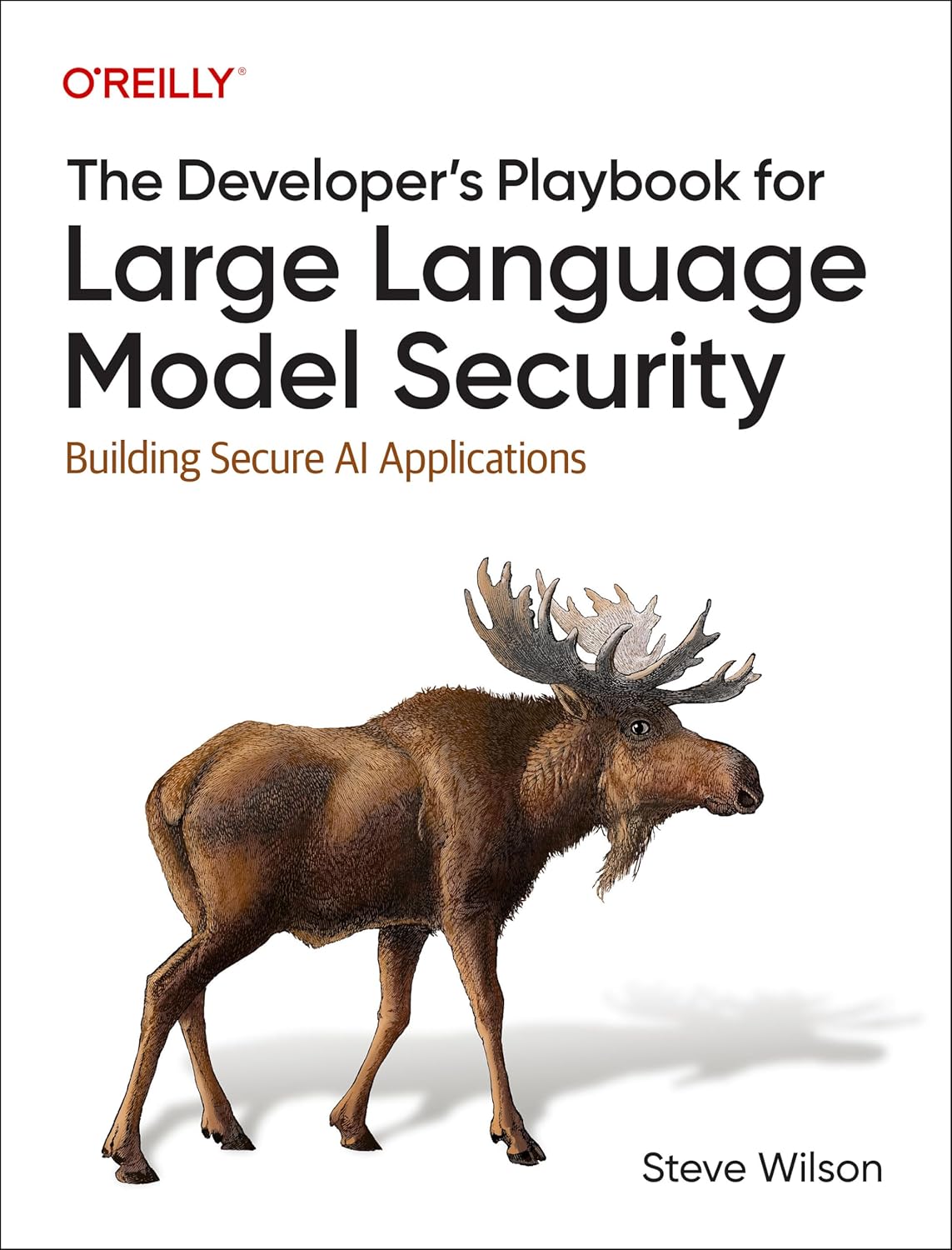
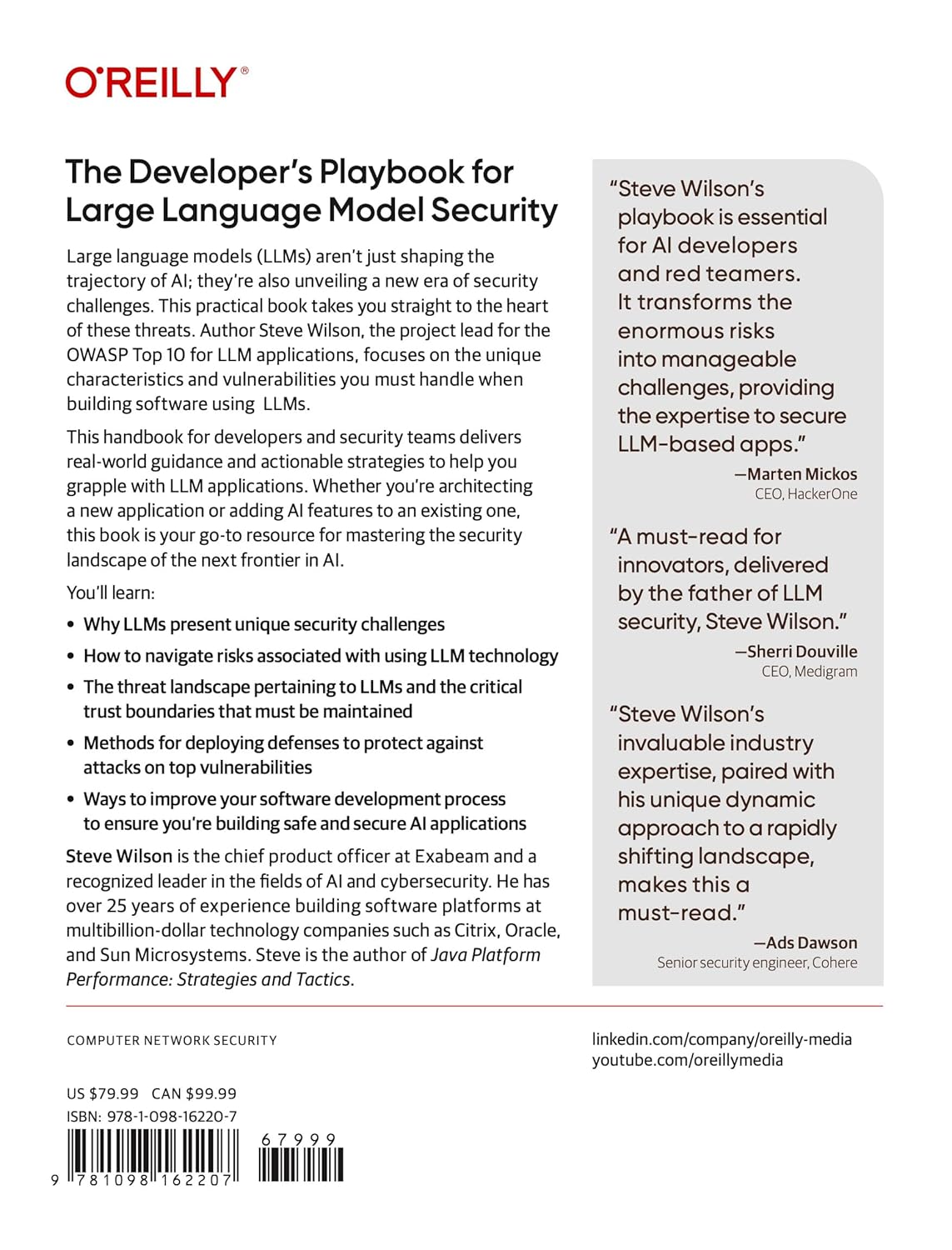
You’ll find that The Developer’s Playbook for Large Language Model Security: Building Secure AI Applications 1st Edition is written with practitioners in mind and focuses on pragmatic defenses you can apply to real products. The book balances technical detail with actionable checklists so you can implement secure patterns quickly while retaining a broader view of governance, testing, and incident response.
What this book is about
This book is framed as a hands-on manual for teams developing and shipping applications that use large language models (LLMs). It walks you through common LLM threats, secure integration patterns, monitoring and response practices, and governance design so you can make informed decisions about model risk in your organization.
Scope and focus
The scope centers on the intersection of application security and machine learning operations for LLMs. You’ll get guidance that ties classic secure software practices to the new failure modes specific to LLMs, like prompt injection, data leakage, model poisoning, and unintended outputs.
Practical vs theoretical
The Playbook is tilted toward practicality: expect sample architectures, checklists, red-team exercises, and concrete mitigations. At the same time, the book provides just enough theory to help you reason about threat models and trade-offs, which helps when you must adapt techniques to a unique product context.
Who should read this
You should consider this book if you’re building or operating systems that rely on LLMs and you care about safety, compliance, or user trust. It’s written to be accessible to engineers and security professionals while still useful to product people and managers involved in risk decisions.
Developers and engineers
If you write code that calls LLM APIs, integrates models into services, or builds user-facing assistants, the Playbook shows you how to embed validation, rate limits, privilege boundaries, and secure prompts into your codebase. You’ll get patterns you can start using right away to reduce common vulnerabilities.
Security professionals
If you’re part of an application security or cloud security team, this book helps you expand threat modeling to include generative AI vectors. You’ll learn how to evaluate supply chain risks, craft mitigation plans, and run red-team exercises specific to LLM behaviors.
Product managers
As a PM, you’ll appreciate the sections on governance, stakeholder responsibilities, and risk tradeoffs. The Playbook helps you translate technical controls into product-level commitments and safety requirements, which can then be prioritized and measured.
Educators and students
If you teach secure ML, applied AI, or software security, this text can serve as a practical supplement to more academic resources. Students gain a realistic view of how to design and protect AI-enhanced applications in production environments.
Key topics covered
The book covers a broad set of topics that map to the full lifecycle of LLM-based systems. You’ll get concrete suggestions on how to secure models at design time, implementation time, and runtime.
LLM fundamentals and threat models
You’ll find a concise recap of LLM architecture and the unique attack surfaces these models present. The treatment of threat models helps you prioritize mitigations based on probable impact and feasibility.
Prompt injection and sanitization
Prompt injection is covered in detail, with detection heuristics, input sanitization patterns, and policies for isolating untrusted input. The Playbook explains how to design robust prompt templates and mitigate malicious user instructions.
Data leakage and privacy
The book outlines strategies to prevent sensitive data exfiltration, including data minimization, differential privacy options, and auditing of training/evaluation datasets. You’ll learn methods for classifying data sensitivity and protecting PII in interactions with the model.
Model poisoning and supply chain risks
You’ll get a practical discussion of model integrity risks, including poisoned training data and compromised checkpoints. The authors explain verification techniques, trusted model registries, and provenance tracking you can adopt.
Secure integration patterns
There’s a set of architecture patterns for securely integrating LLMs into services, including trusted proxies, policy layers, and multi-stage pipelines. These patterns aim to reduce blast radius and make failures observable and recoverable.
Monitoring, logging, and observability
The Playbook provides blueprints for meaningful telemetry, alerting thresholds, and privacy-conscious logging. You’ll learn what to log, how to detect drift or adversarial behavior, and how to build effective dashboards for operations teams.
Incident response and forensics
You’ll discover playbooks for investigating model-related incidents, including containment steps and post-mortem processes tailored to LLM failures. The book helps you build evidence-preserving practices and coordinate cross-functional responders.
Compliance, governance, and policy
The book discusses regulatory requirements and internal governance frameworks for AI system oversight. You’ll find guidance on policy templates, review gates, and alignment with standards such as data protection laws.
Testing, CI/CD, and MLOps for LLMs
Testing and deployment sections describe unit, integration, and adversarial tests specific to LLM behavior, plus CI/CD practices for model updates. You’ll learn how to stage releases, run canaries for model changes, and roll back risky updates.
Access control and authentication
The Playbook shows strategies for least-privilege access to model APIs, secrets management, and multi-tenant isolation. You’ll see patterns for role-based access and how to prevent lateral movement in complex AI ecosystems.
Explainability and auditing
You’ll get coverage of interpretability tools and auditing mechanisms to make model decisions auditable and accountable. The book frames explainability as a complement to other controls rather than a silver bullet.
Adversarial evaluation and red teaming
There are concrete methods to run adversarial tests and red-team exercises that simulate realistic threats. You’ll receive templates for scoring results and incorporating findings into risk prioritization.
Tools and libraries
The Playbook surveys a set of tools and libraries helpful for implementing the described controls, including opensource projects and vendor solutions. The authors also give guidance on choosing tools based on operational constraints.

Chapter-by-chapter breakdown
Below is a simplified breakdown of what each chapter covers and the practical takeaways you can expect. This table will help you navigate the book and identify sections relevant to your role.
| Chapter | Main focus | Practical takeaways |
|---|---|---|
| 1. LLM Basics & Threat Landscape | Introduces LLM internals and unique risks | Helps you form initial threat models and identify where to harden systems |
| 2. Secure Design Patterns | Architectural approaches for safe integration | Provides diagrams and templates for safe pipelines and proxies |
| 3. Prompt Management | Secure prompt construction and template governance | Gives sanitization patterns and prompt versioning strategies |
| 4. Data Protection | Preventing data leakage and protecting PII | Checklists for data minimization, encryption, and access controls |
| 5. Model Integrity | Supply chain and poisoning risks | Introduces provenance, signing, and model verification steps |
| 6. Authorization & Access | Securing model endpoints and secrets | Implements RBAC, API gateways, and secrets rotation policies |
| 7. Observability & Telemetry | Logging, metrics, and anomaly detection | Examples for alerts and dashboards to detect misbehavior |
| 8. Adversarial Testing | Red teaming and adversarial evaluation methods | Test suites to measure robustness and guide fixes |
| 9. Incident Response | Response plans for model incidents | Runbooks and escalation paths for containment and recovery |
| 10. Compliance & Governance | Legal and policy considerations | Templates for audit trails, consent, and vendor risk |
| 11. Continuous Delivery | CI/CD practices for model deployment | Steps to stage, test, and roll back model changes |
| 12. Case Studies | Real-world incidents and mitigations | Lessons learned and how to adapt to your product context |
| 13. Tools & Ecosystem | Recommended tools and integrations | Guidance for adopting OSS or commercial tooling |
| 14. Future Directions | Emerging risks and research trends | How to prepare your teams for evolving model capabilities |
You’ll find that each chapter contains both conceptual explanation and hands-on artifacts such as checklists, snippet examples, and policy templates. The chapter structure supports selective reading, so you can jump directly to topics that matter most to your project.
Strengths
This Playbook has several strengths that make it a valuable reference for teams working with LLMs. It packages complex concepts into usable patterns and emphasizes operational controls.
Practical examples and checklists
You’ll find ready-made checklists and post-deployment validation steps that are easy to adopt in day-to-day workflows. Those artifacts shorten the gap between reading and doing, letting your team implement mitigations faster.
Hands-on code and patterns
The book includes code snippets and architecture diagrams showing how to implement secure proxies, sanitize inputs, and instrument telemetry. You’ll be able to adapt these examples to your codebase and iterate from there.
Up-to-date threat models
Authors keep threat models practical and current, addressing immediate risks like prompt injection and poisoning as well as emergent risks such as covert channels and model inversion. This helps you prioritize mitigations with a defensible rationale.
Balanced coverage
The Playbook treats technical controls and organizational aspects with roughly equal importance, which is critical because many incidents stem from process failures rather than purely technical bugs. You’ll get templates and role definitions to integrate into your governance model.
Weaknesses
No single book can be exhaustive given how quickly the field of LLM security is changing, and this Playbook has a few limitations you should be aware of.
Assumed prior knowledge
The book sometimes assumes familiarity with basic ML and security concepts. If you are completely new to either domain, you might find some technical discussions terse and will need supplementary resources to fill in gaps.
Rapidly evolving field
Because the space evolves so fast, tool recommendations and vendor guidance can become outdated quickly. You’ll want to treat tooling suggestions as starting points and validate current support and maturity before adopting them at scale.
Tooling specificities and integrations
Some of the code examples or integration patterns are tied to popular providers or libraries at the time of writing. If your stack differs, you’ll need to translate patterns to your environment and possibly rethink certain implementations.
How it compares to other books
Compared with academic treatises on AI safety and classic MLOps books, this Playbook is more hands-on and targeted at immediate engineering practices. You’ll find it more actionable than theoretical texts and more security-centered than most ML engineering guides. If you need a complement to deeper ML theory, pair this Playbook with an ML fundamentals text to fill conceptual gaps.
Real-world relevance and case studies
Scattered throughout the Playbook are short case studies that illustrate real incidents and their remediation. You’ll benefit from seeing how teams responded to data exfiltration, hallucination-related misinformation, and policy violations, because these practical stories show how controls work under pressure.
How to apply the lessons in your projects
You should adopt a pragmatic approach: pick the controls with the highest ROI for your context and iterate. Use the Playbook’s risk matrices to map threats to mitigations and then implement the lowest-friction wins first to reduce exposure quickly.
Quick starter checklist
Begin with a short starter checklist: define an LLM threat model for your product, add prompt validation, centralize access control to model endpoints, and establish basic telemetry for model outputs. These steps will quickly reduce the most common operational risks.
Team processes and playbooks
You’ll want to integrate the Playbook’s runbooks into your incident response process and make security reviews part of your release gates. Assign roles for monitoring, triage, and post-mortem to ensure incidents are handled consistently and lessons are captured.
Example snippets and templates
The book provides a number of templates and example snippets you can adapt, such as prompt templates, policy lists, and incident severity levels. You’ll find sample regular expressions, validation logic, and pseudo-code for a proxy layer to filter and rewrite model inputs and outputs.
Here is a conceptual example of how you might structure safe model calls in pseudocode (illustrative, not a complete implementation):
- Sanitize user_input
- Classify input_sensitivity = sensitivity_model.predict(user_input)
- If input_sensitivity == HIGH:
- Mask sensitive tokens
- Route for manual review or enforce strict templates
- Construct guarded_prompt using approved_template + sanitized_input
- Call model API with rate limiting and signed credentials
- Validate model_output for policy violations
- If violation_detected:
- Block response and log incident
- Trigger alert to security channel
- Persist telemetry and hashes for audit
You’ll adapt this conceptual flow to your stack, but the Playbook gives you concrete code patterns that mirror these steps in popular languages and frameworks.
Monitoring and alerting suggestions
The Playbook goes beyond generic logging advice and recommends concrete metrics and detection signals tailored to LLMs. You’ll get sample thresholds for increases in unusual token generation, repetition-based attacks, or spikes in sensitive entity mentions.
You should instrument both model-side signals (e.g., confidence proxies, token probabilities if available) and application-side signals (e.g., user behavior, downstream effect metrics). Combining these signals helps reduce false positives and provides a more complete picture of system health.
Running red-team exercises
You’ll learn how to structure adversarial testing, including attacker profiles, success criteria, and scoring systems. The Playbook provides templates for threat scenarios, such as social engineering prompts, prompt injection campaigns, or privacy extraction attempts, and helps you iterate on hardened defenses.
Integration into CI/CD and release processes
You’ll find recommendations for gating model releases behind automated tests, behavioral baselines, and canary rollouts. The Playbook suggests building automated adversarial test suites into CI so that model regressions are caught early, and it outlines rollback criteria to minimize user exposure.
Governance and cross-team coordination
The book stresses the importance of cross-functional governance, involving legal, privacy, product, and security teams. You’ll get suggested meeting cadences, review templates, and decision criteria to make governance practical rather than bureaucratic.
Pricing and edition notes
This is the 1st Edition, and pricing will depend on the publisher and retailer you choose. Since the Playbook focuses on operational practices, buying a personal copy for your team and creating a shared internal summary of key checklists makes it easier for your organization to adopt recommended controls quickly.
Final recommendation
If you’re building or operating LLM-based systems, you should read The Developer’s Playbook for Large Language Model Security: Building Secure AI Applications 1st Edition to accelerate the maturation of your security posture. The book gives you a pragmatic toolkit and organizational playbooks that make it easier to ship AI features more safely and confidently.
You’ll come away with reproducible patterns, checklists you can embed into workflows, and the language to communicate model risks to stakeholders. Use the Playbook as the operational backbone for your AI safety practice, and update its recommended tooling with vendor and OSS developments as the field evolves.

Disclosure: As an Amazon Associate, I earn from qualifying purchases.